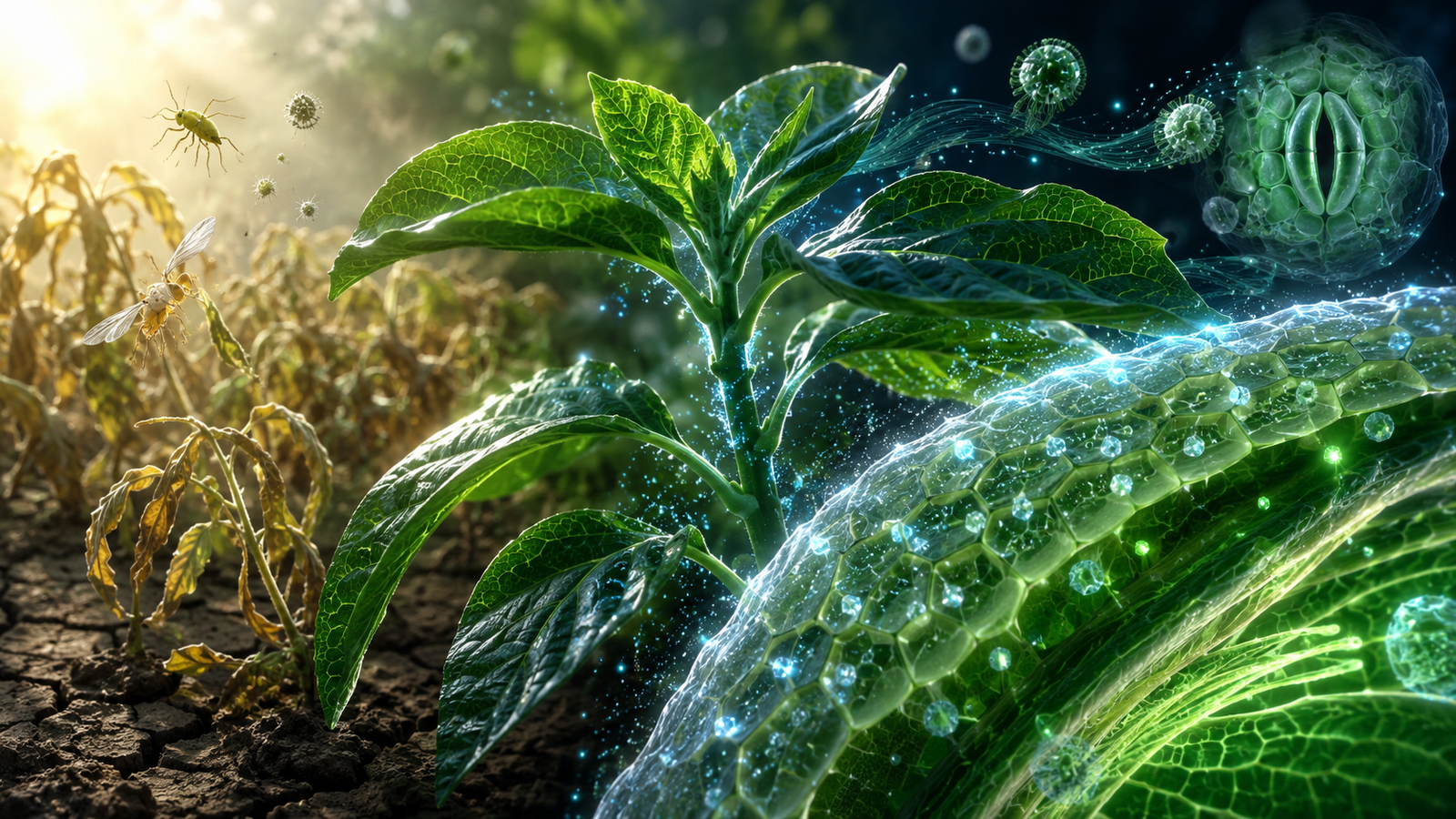
Booster Love Green is a high-performance biostimulant developed by Konzept Green GmbH, designed to move beyond traditional fertilization by fundamentally optimizing a plant’s physiological and structural resilience. From a scientific perspective, its ability to resist viruses and other pathogens is not a result of a single “silver bullet” chemical, but rather a multi-faceted enhancement of the plant’s natural defense systems.
1. Structural Reinforcement: The Silicon Barrier
A central component of Love Green’s scientific efficacy is the integration of silicon (Si) into the plant’s biology. Silicon plays a critical role in strengthening the architecture of the plant at a cellular level:
- Cell Wall Fortification: Silicon is deposited into the cell walls, creating a tougher, more rigid physical barrier. This mechanical hardening makes it significantly more difficult for pathogen-carrying pests (vectors) to penetrate the leaf surface and for fungal hyphae to invade the tissue.
- Vascular Integrity: By strengthening the plant’s internal structures, silicon also helps regulate the water balance and maintain vascular health, ensuring that the plant’s internal transport systems remain functional even under the pressure of infection or environmental stress.
2. Bio-Energetic Optimization: Maximizing Photosynthetic Efficiency
Unlike standard fertilizers, Love Green is engineered to optimize the entire photosynthesis process. This has profound implications for a plant’s immune capacity:
- Energy Surplus for Defense: Through increased photosynthetic efficiency, the plant can generate more energy and biomass. In botanical science, a plant with an energy surplus can afford the “metabolic cost” of activating systemic acquired resistance (SAR), producing defensive proteins and secondary metabolites that actively fight off viral and bacterial threats.
- Stomatal Regulation: Love Green aids in the precise control of stomata (leaf pores). Scientific research suggests that maintaining optimal stomatal movement—closing them only as much as necessary during stress—prevents the opportunistic entry of certain pathogens while maintaining the CO₂ intake required for sustained energy production.
3. Biochemical Stealth: Reducing Pest Attraction
One of the most sophisticated scientific ways Love Green protects plants is by altering their biochemical signaling.
- Eliminating “Distress Beacons”: It is well-documented that plants under stress or in poor health emit specific biochemical signals that act as attractants for pests. Because many plant viruses are transmitted via insect vectors (such as aphids or whiteflies), these signals effectively invite disease into the field.
- Systemic Health as Defense: By ensuring the plant remains healthy and unstressed, Love Green significantly reduces the emission of these “distress signals”. A treated plant becomes biologically “invisible” or less attractive to these vectors, thereby breaking the primary transmission cycle of many plant viruses.
4. Physiological Resilience and Stress Mitigation
Pathogens often take advantage of plants weakened by environmental factors such as drought or extreme heat. Love Green acts as a physiological buffer:
- Thermotolerance and Drought Resistance: Treated plants exhibit a higher tolerance to heat and dry conditions, retaining their leathery green color and cellular turgidity while untreated plants suffer from chlorosis (yellowing) and wilting.
- Maintaining Homeostasis: By preventing the physiological breakdown associated with climate stress, Love Green ensures the plant’s immune system does not shut down. This continuous state of cellular homeostasis allows the plant to remain “vigilant” and prepared to deploy biological defenses against any invading pathogens.
5. Rapid Efficacy and Systemic Results
The scientific impact of Love Green is often visible within two weeks of application. This rapid response is characterized by the growth of larger, healthier leaves and a visible increase in biomass. By fostering a more robust organism from the early growth stages, Love Green creates a cumulative defensive advantage, resulting in a plant that is economically and ecologically superior due to a reduced reliance on external chemical pesticides and fungicides